The current flag, like the one that preceded it, carries no meaningful significance. Indeed, the present flag is merely an obvious imitation of the flags of Arab countries such as Palestine, Jordan and others. It disregards our country’s rich history, its civilisations deeply rooted in human history, and its geographical and demographic diversity. It also overlooks some of our country’s most important landmarks, such as the pyramids and the two Niles — features that are scarcely found together in any country other than our own. Therefore, as explained in the Party’s Founding Document, these regrettable mistakes must be rectified, and the country must reclaim the true name by which it was historically known, before other peoples arrived, disparaged its inhabitants and imposed upon them a name of their own coinage as an expression of superiority. The flag we present to our people is not a collection of meaningless colours, nor an imitation of others.
Rather, it springs from our land and its civilisation, which preceded many other civilisations. Scientific genetic research has also established that our country is the cradle of all humanity: there is no person walking the Earth today whose origins do not ultimately trace back to this land. What greater honour or source of pride could distinguish our country among all the peoples of the world?
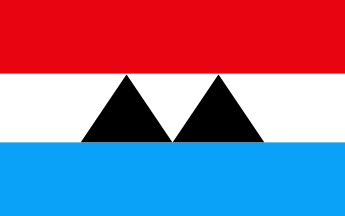
Below is a brief explanation of the flag's colours and symbols.
Every drop of blood shed throughout our country's history — from the sacrifices of our great ancestors through the ages to those made by the people of our homeland in its modern revolutions.
Peace, respect for our country's diversity, and the shared values that unite its people.
The great civilisation of our Kushite ancestors, who united the Nile Valley under their rule and whose political and military influence extended to the regions of Palestine and the Levant.
The two great Niles, which meet in our capital, Khartoum, to form the Nile — the longest river in Africa and one of the world's two longest rivers.